HBExcellent

Welcome to HBExcellent where we believe that giftedness and ADHD are gifts that can enrich your life – once you learn how to manage them. We also believe that, once you run into a problem, you ought to get help a.s.a.p instead of losing precious time on waiting lists. Hence, we have set up independent practice. We don’t work with health insurances and are thus not hampered by waiting lists and budgets. We understand that you as a professional might not like to ask your superior for time off to go and see a therapist or counselor – so we are flexible and offer help outside office hours and during weekends. We are here for you when you need us.

ADHD
ADHD-diagnostic

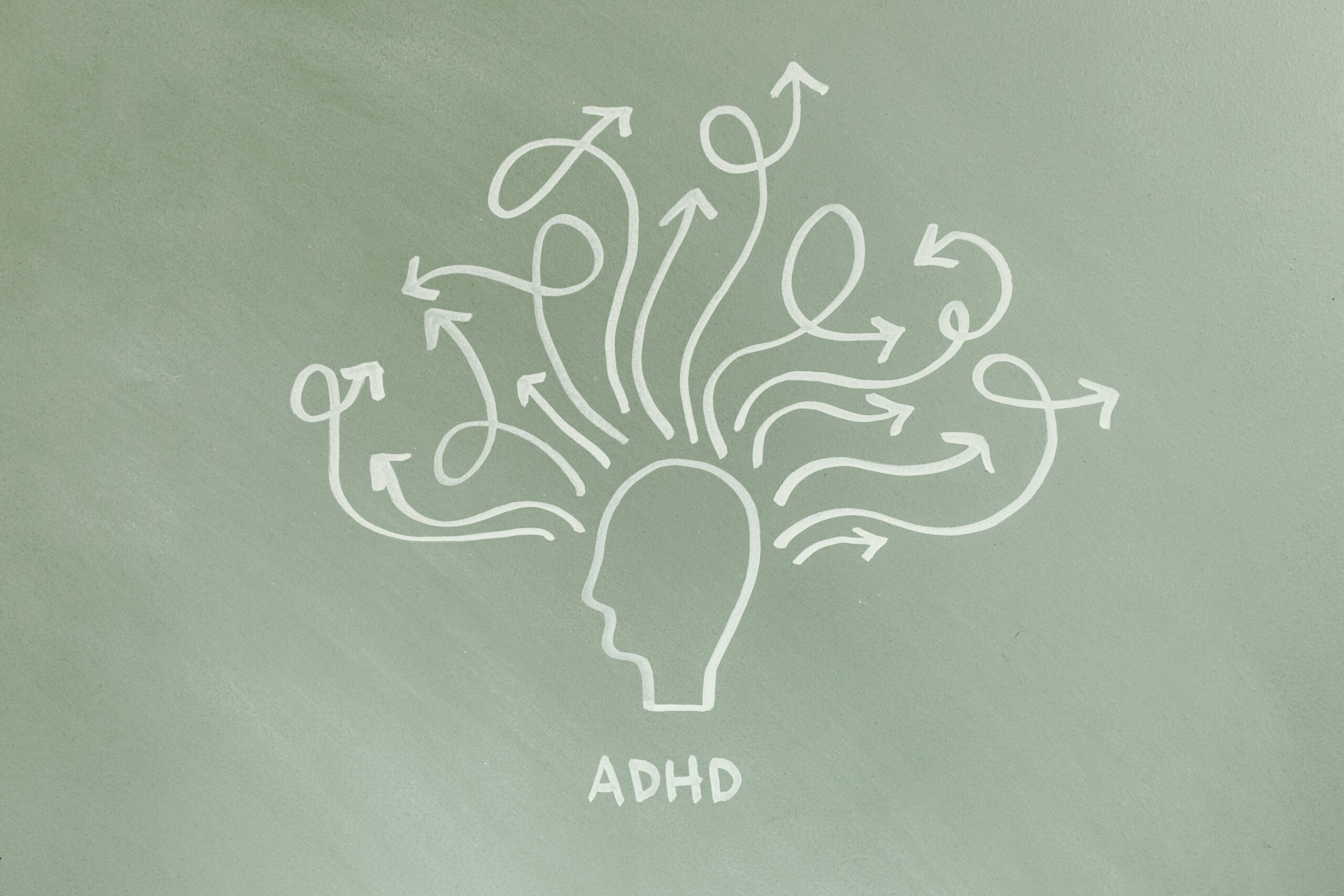
Under the current DSM-V classification system, ADHD and ADD are grouped together under the heading ADHD. Both are characterized by a short attention span and a head that is full of thoughts and ideas that sometimes seem to burst. You often have several thoughts at once but can only hold onto them for a moment before they disappear again. As a result, you forget a lot and come across as chaotic and clumsy. You may also be impulsive and experience intense emotions. Over time, all of this can cause problems at school, university, work and in your private life. It can lead to low self-esteem and prevent you from realizing your full potential. It is important to recognize the problem early on and offer support. We are here to help!

The diagnostic process consists of at least four steps:

First evaluation

A comprehensive intake interview is conducted to gain an understanding of you as a person, your developmental history, and your symptoms.

The second step is a structured interview about ADHD:

This is a validated questionnaire with open questions covering various aspects of your life. The questionnaire is used to determine which characteristics of ADHD are present in you and in which areas.

In the third step

The same questionnaire is administered to parents/caregivers in the case of young people and/or parents/siblings/partners in the case of adults to obtain an “external” perspective (this interview can also be conducted in German, French, Spanish, Portuguese, Italian, Romanian, Serbo-Croat, Russian or Bulgarian).

The questionnaires are then analyzed (standardized process with clear guidelines). If enough characteristics are found in sufficient areas, a diagnosis can be made. We then hold a consultation about the (possible) diagnosis, during which we also discuss the possible next steps. Finally, you will receive a diagnostic report which, in the event of a diagnosis, will be signed by a mental health psychologist (GZ-psychologist in the Netherlands). You will need this for a prescription for medication and/or arranging special school facilities (such as a quiet room, extra time for tests, etc.).

ADHD treatment

There are various strategies to learn how to cope better with ADHD. HBE offers various programmes for both children/teenagers and adults to teach you how to manage the disadvantages of ADHD and benefit from its advantages. The standard programme consists of 10 sessions. After an extensive intake, we work with an ADHD protocol based on cognitive behavioural therapy, in which you learn a new skill each week, which you then practise through homework assignments. Each week, we administer an ADHD screener to monitor your progress. We conclude with a final meeting in which we map out and evaluate your learning process and analyze whether there is a need for further guidance. We conclude the programme with a report.
ADHD

ADHD and giftedness

Characteristics ADHD

ADHD Medication

Giftedness

Giftedness
Characteristics

Giftedness Diagnostic

Giftedness counselling

Giftedness and ADHD

Giftedness – Parent advice and counselling

For schools/ institutions

young director
HB-brede blik - Copy

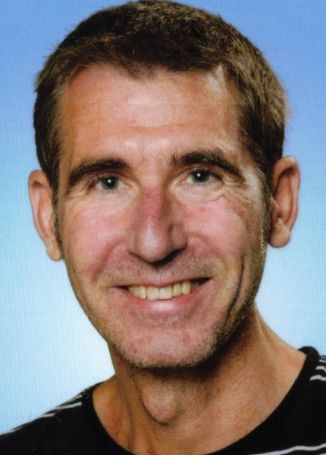
Who am I?

Having grown up in Germany I went to the UK at the age of seventeen to take my A-levels and stayed on to do a bachelor’s in politics and Slavonic Studies at the University of Leeds, State University Moscow and State University Sofia. I continued reading for an MBA before returning to Germany to work as Management Consultant and later transitioning into IT. In 2000 I moved to the Netherlands where I worked in IT for seven years before becoming a teacher in secondary education, doing teacher-training while working full-time as a teacher. In 2015 I started reading Psychology at the FernUniversität Hagen in Germany, and in 2018 I took my first course in giftedness at Exentra in Antwerp. Between 2020 and 2022 I took my ECHA-specialist degree in giftedness at the Radboud University in Nijmegen and went on to do a Master’s in clinical psychology at the Open University of the Netherlands. I did one year of internship at a multinational psychological clinic in Amsterdam where I did diagnostics and treatments in English, Italian, Spanish and Portuguese.
Since 2021 I have also been working as a Project Manager for the gifted network of two local education partnerships and have set up two parent networks.
At age 47 I got the diagnosis ADHD and I was extremely glad and relieved to finally understand why I had encountered so many difficulties in my daily life during my lifetime. This experience has taught me that an early diagnosis is of the utmost importance.
I have dedicated myself to lifelong learning and to helping others.

FAQs

Here you will find more information about costs, the no-show policy, cancelling and rescheduling appointments, the child protection reporting code, the complaints procedure, confidential advisors, handling client files and confidential information, and the feedback form.

Cost

  • Intakes, counselling sessions, treatment sessions €100 - €120

    (sessions 50 minutes each): Euro 100/ Euro 120 (weekends)

  • ADHD diagnosis €850

    (consisting of intake, structured client interview, structured interview with family/siblings/spouse, analysis, report including signature of mental health psychologist, advisory counselling session)

  • ADHD treatment programme €1150

    (consisting of intake, 8 sessions with ADHD protocol based on CBT and weekly ADHD screener, consultation and final report).

ADHD programme for gifted individuals is tailor-made (sessions of 50 minutes, rate €100)
Lectures, training courses and workshops for schools/institutions: price on request

Cancelling appointments/ no-show:

Appointments that are not cancelled 24 hours in advance will be considered a no-show and will be charged in full.

Belangrijke informatie en documenten

Youth safety protocol

Client file and confidentiality of personal data

Contact

Do you already have a strong suspicion that giftedness and/or ADHD may be involved?

Feel free to contact us via contact form, email or WhatsApp and make an appointment for an introductory meeting. This can take place at short notice. 

Are you unsure whether giftedness and/or ADHD may be involved? Then make an appointment for a short orientation meeting via the contact form (subject: orientation meeting). This 15-minute meeting is without obligation and free of charge. 

We prefer to work online (Zoom) or by telephone. There are additional costs for meetings on-site. 

Because we want to offer rapid assistance, we do not work with health insurances. This means that the costs are borne by our clients themselves. More information about costs, reporting codes and the complaints procedure can be found in the FAQs. 

Contact

Contact

Contactformulier

Adres

58 Polanen, Nieuw-Vennep, Noord-Holland 2151DT, Nederland

Telefoon

+31622974688

HBExcellent does not have a crisis service. We cannot accept crisis-prone clients. In case of crisis, call 113 suicide prevention (Netherlands) or ask your GP for a mental health practice with a crisis service in your area.

ADHD and giftedness

ADHD and giftedness often occur simultaneously and can reinforce each other both negatively and positively or, worse, mask each other.

Typically, gifted individuals with ADHD often have a poor self-image. They understand things quickly and can think deeply, but in practice, ADHD often causes things to go wrong, leading to many accumulating experiences of failure. As a result, people often cannot realize their potential, which can lead to a life of feeling short-changed. 

The treatment of gifted individuals with ADHD is tailor-made and always tailored to the individual, because experience has shown that techniques from cognitive behavioural therapy and protocols based on it do not work well with gifted individuals: they see right through them immediately, which negates the effect. Every gifted person is different, and the impact of ADHD is also different for every gifted person. That is why we start with an extensive intake process to get a good understanding of you and your ADHD. We then develop a programme that meets your specific needs. 

A timely diagnosis is important so that the right help can be provided.


Interaction between giftedness and ADHD:

ADHD and giftedness often occur simultaneously and can reinforce each other both negatively and positively or, worse, mask each other. Because of this masking effect, ADHD in gifted individuals is often overlooked by psychologists: giftedness is not part of the training of psychologists, they are not familiar with the characteristics and peculiarities, and therefore the diagnostic process often goes wrong. There is a reasonable chance that you will not be diagnosed with ADHD and that your giftedness won’t not be detected in the test either! In this case, you simply need a psychologist who has been trained in giftedness as well.

Characteristics ADHD:

Under the current DSM-V classification system, ADHD and ADD are grouped together under the heading ADHD. Both are characterized by a short attention span and a head so full of thoughts and ideas that sometimes seem to burst. You often have multiple thoughts at once but you can only hold onto them for a moment before they disappear again. As a result, you forget a lot and come across as chaotic and clumsy. Fine motor skills are often poorly developed, resulting in poor handwriting and a tendency to drop or break things. You often find it impossible to concentrate, even when you really want to learn. You read the material but find that it doesn't get through the tsunami of thoughts and therefore doesn't stick. You can stare at a page for hours without taking it in. Studying for school can be a frustrating experience! You understand the material immediately when it is explained, but in the test, you can't remember anything. That is typical of ADHD! And, at the same time, when you are doing something that really interests you, you can forget everything around you, including time and space. This is called hyperfocus. That is why ADHD often goes unnoticed.

Furthermore, you may be greatly bothered by external stimuli such as noises, light, etc., because you cannot filter them out.  They are there, they bother you, and you just have to put up with them. This also applies at school, because you see and hear everything in the classroom, even if you don't want to. You cannot filter anything out. That is why people with ADHD often come home from school or work completely exhausted and unable to do anything else. Sometimes it is so bad that you explode with anger because you are so overstimulated. 

The “H” in ADHD stands for hyperactivity. Some people with ADHD are hyperactive: they have endless energy, can hardly (or cannot) sit still and have an enormous urge to move. School days can then become torture. So, help is needed!

ADHD Medicatie

Als je echt last hebt van de drukte in je hoofd en/ of de lichamelijke onrust waardoor stilzitten een marteling wordt dan is medicatie het enige wat echt helpt.
Helaas zijn er veel vooroordelen en misvattingen over deze medicijnen. Mensen zijn vaak bang om ervan afhankelijk te worden (misvatting) of anderen geven aan, dat ze na gebruik van het medicijn erg lam waren (dosis wellicht te hoog). Feit is, dat er verschillende medicijnen zijn – waar onder methylfenidaat en dexamfetamine, die helpen bij concentratie en impulsbeheersing. Dit zijn de meest gebruikten middelen, maar mochten die niet werken of bijwerkingen hebben, dan kan ook atomoxetine of bupropion worden overwogen. 
In alle gevallen moeten de medicijnen door een arts worden voorgeschreven. En omdat eenieder er anders op reageert moet de juiste dosis eerst gevonden worden (dit proces heet “titreren”). Dit betekent, dat je begint bij een bepaalde dosering en past die in overleg met de arts zo lang aan totdat het voor jou werkt.
Het kan overigens ook zijn dat je, als het medicijn al enkele maanden merkt, dat het ineens minder goed werkt. Dan is weer overleg met de arts nodig om de dosis eventueel aan te passen.
Ik persoonlijk ben ontzettend blij met mijn medicatie en functioneer er uitstekend mee. Ik zou niet meer zonder willen en het had me een hoop ellende gescheeld als ik ze eerder dan pas met 47 jaar had gekregen!

Giftedness

Giftedness has many faces. Most people talk about feeling different. Thinking faster, which means that others cannot follow your thoughts (leaps) and do not understand your humour. It means experiencing, seeing and feeling things more intensely. And that can lead to more intense emotions and reactions, which others often do not understand or may even find intimidating. A strong sense of justice that is not limited to yourself, so you simply cannot tolerate injustice in the world. Seeing obstacles that others cannot even imagine, which can cause fears and make you feel  alone, lonely  and misunderstood.

Giftedness Diagnostic

Are you unsure whether your child is gifted? Or do you suspect that you yourself are gifted? Do you regularly encounter certain issues and want to know why?

Then there are two options:

1.

An informational meeting about giftedness, during which we will outline what giftedness entails. If you recognize yourself in this, we will proceed with an intake interview. During this interview, we will discuss your life story, developmental history and educational history. We will also discuss the characteristics of giftedness. After the interview, we can give you an assessment of whether you are likely to be gifted, based on the characteristics we have identified.

2.

You want to know exactly or need official test results for school/university/employer. In that case, we first conduct a thorough intake to map out the developmental history. We can then administer a WISC-V test for pupils aged between 6 and 16 and a WAIS test for people aged 16 and over. These are validated intelligence tests that measure a wide range of cognitive skills. They enable us to map out an intelligence profile and, in the case of a harmonious profile, calculate a total IQ (intelligence quotient). The test is followed by a consultation in which the results are explained. Any follow-up steps can also be discussed. After the consultation, you will receive an official report signed by a mental health psychologist (GZ-psychologist in the Netherlands).

Giftedness counselling

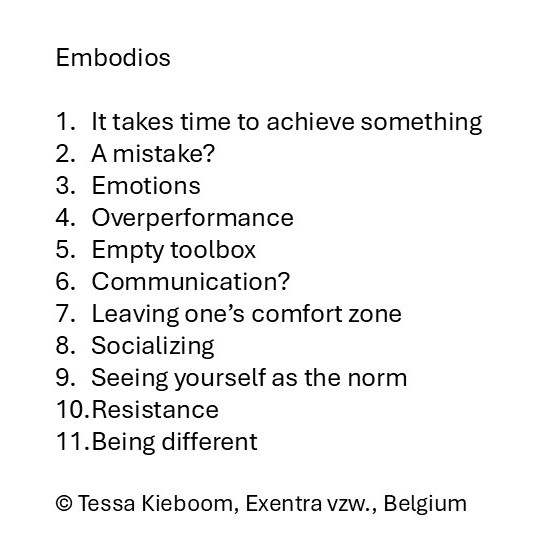
Gifted individuals have a range of characteristics. Tessa Kieboom of Exentra in Flanders calls them the 11 Embodios. Not everyone has all of them, but everyone has some of them. These Embodio’s   can hinder your development and progress. First, we analyze which Embodios you have and then draw up a personal plan of action. After all, every gifted person is different and standard solutions are of no use to you, as you already suffer from them every day. During the coaching process, we work on each Embodio until you have learned to deal with it and feel comfortable with it. Each process is therefore tailor-made. And at the same time, it is an investment in yourself.

Giftedness and ADHD

ADHD and giftedness often occur simultaneously and can reinforce each other both negatively and positively or, worse, mask each other. Because of this masking effect, ADHD in gifted individuals is not always recognized by psychologists: giftedness is not part of psychologists’ training, they are not familiar with the characteristics and peculiarities, and therefore the diagnostic process can sometimes go wrong. There is a reasonable chance that you will not be diagnosed with ADHD and that your giftedness will not be detected in the test either! In this case, you need a psychologist who has been trained in giftedness. 


Characteristics ADHD:

Under the current DSM-V classification system, ADHD and ADD are grouped together under the heading ADHD. Both are characterized by a short attention span and a head so full of thoughts and ideas that sometimes seem to burst. You often have multiple thoughts at the same time but can only hold onto them for a moment before they disappear again. As a result, you forget a lot and come across as chaotic and clumsy. Fine motor skills are often poorly developed, resulting in poor handwriting and a tendency to drop or break things. You often find it impossible to concentrate, even when you really want to learn. You read the material but find that it doesn’t get through the tsunami of thoughts and therefore doesn’t stick. You can stare at a page for hours without taking it in. Studying for school can be a truly frustrating experience! You understand the material immediately when it is explained, but you cannot recall anything during the test. This is typical of ADHD! At the same time, when you are engaged in something that truly interests you, you can forget everything around you, including time and space. This is known as hyperfocus. This is why ADHD often goes unnoticed.

Furthermore, you may be greatly bothered by external stimuli such as noises, light, etc., because you cannot filter them out.  They are there, they bother you, and you just have to put up with them. This also applies at school, because you see and hear everything in the classroom, even if you don’t want to. You cannot filter the stimuli. That is why people with ADHD often come home from school or work feeling completely exhausted and unable to do anything else. Sometimes it is so bad that you feel like exploding with anger because you are so overstimulated. 

The “H” in ADHD stands for hyperactivity. Some people with ADHD are hyperactive: they have endless energy, can hardly (or cannot) sit still and have an enormous urge to move. School days can then become unbearable. 

Typically, gifted individuals with ADHD often have a poor self-image. They understand things quickly and can think deeply, but in practice, ADHD often causes things to go wrong, leading to many accumulated experiences of failure. As a result, people often cannot realize their full potential, which can lead to a life of feeling short-changed.. 

Early diagnosis is important so that the right help can be sought before your self-image has been damaged too much.


Giftedness

Parent advice and counselling

Raising a gifted child can be a huge challenge. Your child is different from the children of your neighbours, friends and acquaintances. They are more intense, more demanding, may be able to read at the age of three, have a thousand questions every day and, if you’re unlucky, don’t follow the rules and argue about everything and anything. Worse still, there is a chance that your three-year-old will win those arguments! 

Parenting advice from those around you does not work, others do not understand your stories and problems, you are at your wits’ end, and you can feel very alone, lonely and desperate. We understand that very well!

It may also be that you have managed reasonably well so far, but things go wrong in secondary school and during puberty and your child suddenly refuses to perform, the school only complains, and your child is at risk of repeating a year or, even worse, dropping out. 

The situation can get even worse when your kid is torn between two cultures: The Dutch culture at school and your own culture and values at home. Chances are that they will clash and that your kid will rebel against stricter rules and higher demands than those set down by school. 

In all cases, one thing is certain: you need help and understanding!

We understand your problems, and we can help you!

Our approach:

We take the time to talk to you and your child to get a clear picture of the situation. Together, we analyze the situation. We can also look at it from a systemic perspective: a family is a system in which the actions of one person provoke reactions and actions from others. This allows us to identify the issues and patterns that are causing problems. We then develop an individual plan of action. Furthermore, we are familiar with the difficulties of being an expat in this country, so we are able to translate interculturally as well. 

If necessary, we can also talk to the school and other relevant authorities. During the counselling process, we can work with both the parents and the child/pupil individually. The aim is to restore peace at home and enable the pupil/ student to function well at school again.

For schools/ institutions

Appropriate education (= inclusion) is a hot topic in the Netherlands, parents and pupils are becoming increasingly assertive, and you may be faced with a growing number of gifted pupils and a lack of the necessary knowledge at school. HBE provides various lectures, workshops and training courses in the field of giftedness, specifically for schools and educational institutions. With years of experience in the classroom and the world of partnerships, we understand your needs and possibilities, but also the limits of those possibilities. We also have experience in setting up and running parent networks, where we can provide a series of lectures for parents of gifted children, both in English and in other languages (for expat parents). 

Please feel free to contact us and make an appointment to explore the possible options!

Feedbackformulier

HBExcellent Begaafdheidsadvies

Contactformulier